
Ingrown Toenail Treatment and Relief
Relief from painful ingrown toenails with careful evaluation, in-office procedures, and clear guidance every step of the way.
What You Need To Know
Understanding ingrown toenails, why they happen, and when to see a podiatrist.
Care for Painful Ingrown Toenails
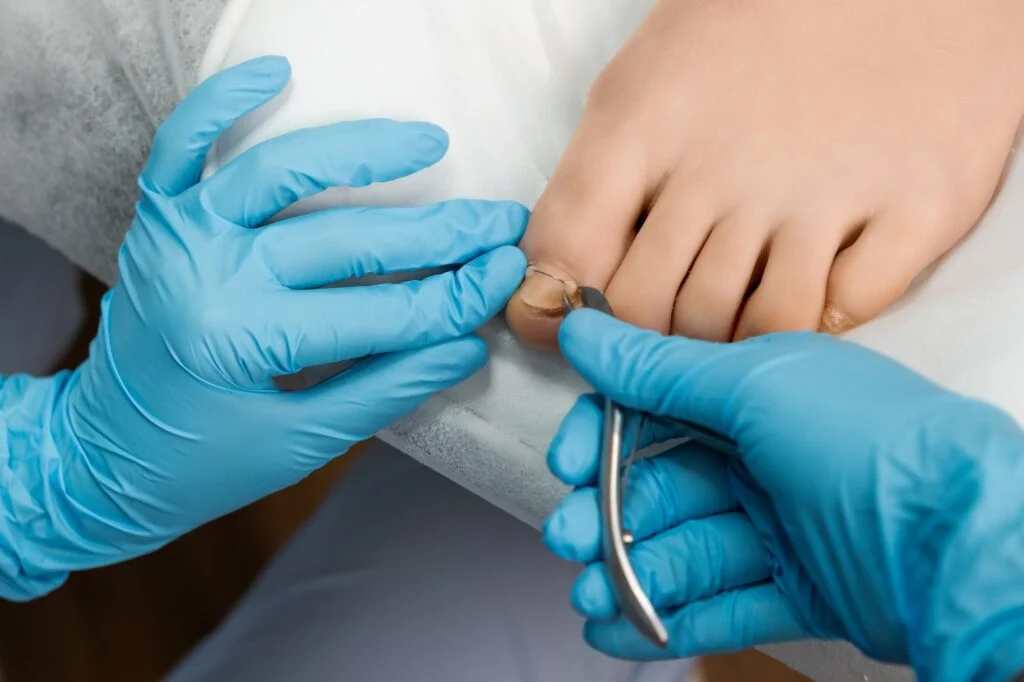
An ingrown toenail occurs when the corner of your toenail grows downward into the adjacent skin, digging painfully into the soft flesh. This common condition can affect any toe, but the big toe is most often affected. When a toenail is ingrown, it is curved downward or flared out and grows into the skin, usually at the sides of the nail. This irritates the skin, which may create pain, redness, swelling, and warmth in the toe.
If an ingrown toenail breaks the skin and allows bacteria to enter, an infection may develop. Infected ingrown toenails may appear red, swollen, and warm to the touch. They may also be painful and ooze foul-smelling fluid (pus), and there may be a bad odor.
Causes of ingrown toenails include heredity, trauma such as stubbing your toe or repeated pressure from running, improper trimming (cutting your nails too short is the most common cause), tight or narrow footwear, and nail conditions like fungal infection or previous nail trauma. Anyone can get an ingrown toenail, but your risk of complications is higher if you have diabetes, poor blood circulation, or nerve damage in the leg or foot (neuropathy).
If you have diabetes, peripheral vascular disease, or another condition that causes poor circulation, you should seek professional treatment as soon as possible. Do not try to treat it yourself. You should also call us if you suspect the ingrown toenail is infected. If your symptoms fail to improve with home care, it is time to see a podiatrist for evaluation.
Treatment, Home Care, and Prevention
First, we carefully evaluate your foot and review your medical history. Then, you receive an individualized treatment plan that may include a prescription for topical or oral medication. If an infection is present, an oral antibiotic may also be prescribed. Your provider may place a splint under the nail to help it grow away from the skin and relieve discomfort.
If ingrown toenails are a chronic problem, your provider may perform a minor surgical procedure, often performed in the office, to partially or completely remove the nail. After an injection with a local anesthetic, the doctor removes part of the nail’s side border. Some nails may become ingrown again, requiring surgical removal of the nail root. Depending on your needs, we may use a chemical, laser, or other methods.
Following the procedure, a simple bandage is applied. Most people experience very little pain and may resume normal activity the next day or two. If your doctor has prescribed an oral antibiotic, be sure to take all the medication, even if your symptoms have improved.
The infamous “bathroom surgery” approach is not recommended. Do not cut a notch in the nail, do not place cotton under the nail, and know that over-the-counter topical medications may mask pain but do not correct the underlying problem. Many cases can be prevented by cutting toenails in a fairly straight line without trimming them too short, and by wearing shoes that are neither too tight nor too loose. If pain persists, our team is ready to help you find lasting relief.
Find Ingrown Toenail Care Near You
We have locations throughout the area to make expert foot and ankle care convenient.





Don’t let an ingrown toenail keep you off your feet any longer
We’re here to help you find relief quickly. Call or book online today.