
Plantar Wart Treatment That Works
Painful plantar warts don’t have to slow you down. We offer effective treatment options, including Swift microwave therapy.
What You Need to Know
Understanding plantar warts, what causes them, and when it’s time to see a podiatrist.
Understanding Plantar Warts
A wart is a small growth on the skin that develops when the skin is infected by a virus. Warts can develop anywhere on the foot, but they typically appear on the bottom (plantar side) of the foot. Plantar warts most commonly occur in children, adolescents, and the elderly. “Plantar” means “of the sole” in Latin. Unlike other types of warts, plantar warts are typically quite painful, as pressure from walking and standing forces them to grow into your skin.
There are two types of plantar warts. A solitary wart is a single wart that often increases in size and may eventually multiply, forming additional satellite warts. Mosaic warts are a cluster of small warts growing closely together in one area, and they are more difficult to treat than solitary warts.
Plantar warts are caused by direct contact with the human papillomavirus (HPV), specifically types 1, 2, 4, 60, and 63. Underneath the skin, the wart can have finger-like roots that reach down and grow, making them difficult to treat from the surface. Warts may be passed to another person through direct contact or by using towels or objects a person with warts has used.
Common signs include thickened skin that resembles a callus, pain when walking or when squeezing the sides of the lesion, and tiny black dots on the surface. You may also feel like you have “painful pebbles” in your shoes. If the lesion is painful, bleeding, changing color, or not responding to over-the-counter treatments, it’s time to have it evaluated by a podiatrist who can confirm the diagnosis and start you on the right treatment plan.
Swift Microwave Therapy for Warts
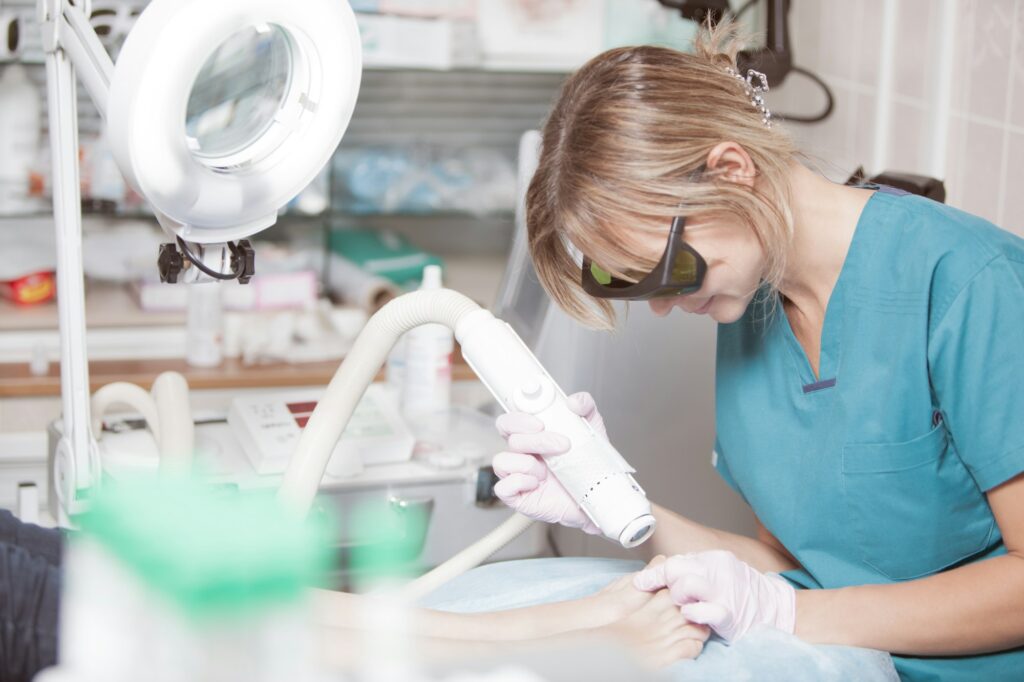
Swift is an FDA-cleared technology that has proven to be highly effective in the removal of plantar warts. It delivers low-dose microwave energy through a specialized probe that targets the underlying HPV virus by stimulating a natural immune response in the body. We like to say that we’re addressing the root cause, not the symptom.
The Swift protocol involves 3 to 4 treatments, spaced 4 weeks apart, aligning with the body’s natural immune cycle. Each treatment lasts only 5 to 10 minutes and is what we call a “sock off, sock on” treatment: limited debridement, no breaking of the skin, and no bandages. No home treatment is required between visits, and patients can resume daily activities immediately after.
Does it hurt? Pain is variable and patient specific, but most patients feel some discomfort as infected tissue temperatures are rapidly elevated over a 2 second dose of energy. The sensation feels similar to a small scratch or injection and subsides quickly once energy delivery stops. Some patients experience mild soreness afterward, but not enough to interfere with day-to-day activities.
Warts are stubborn and may return, so it’s important to follow home care instructions and keep your follow-up visits. If a lesion does not respond to treatment, a biopsy may be performed to rule out other causes. Patients should never try to surgically remove warts themselves, as this can do more harm than good. If you’d like to explore Swift or another treatment option, our team is happy to help you find the right approach.
Where to Find Plantar Wart Care
Find a convenient Artisan Foot and Ankle Specialists location for your plantar wart treatment.



Ready to get rid of that painful plantar wart for good?
Don’t wait for it to spread. We’ll help you get back on your feet quickly.