
Total Ankle Replacement Surgery
Restore mobility and relieve chronic ankle pain with a modern joint replacement procedure tailored to your needs.
What You Need To Know
Understanding when ankle replacement is the right option for lasting pain relief.
Understanding Total Ankle Replacement
Total ankle replacement surgery, also known as ankle arthroplasty, involves replacing the damaged surfaces of the ankle joint with prosthetic components. The goal of this procedure is to relieve the patient’s pain and improve their ankle function.
Preservation of ankle joint motion is imperative for being able to complete everyday activities such as walking, climbing stairs, and engaging in recreational activities. When constant pain and limited mobility are affecting your daily life, it’s time to consider an alternative. Total ankle replacement surgery can restore your ankle function and provide relief from debilitating pain.
Ideal candidates for ankle replacement are individuals over 50 years old who maintain a healthy weight, those who suffer from severe ankle arthritis, individuals who previously had unsuccessful surgeries and are in pain with limited mobility, and those who had a bad ankle sprain or fracture in their younger years. Patients who suffer from advanced diabetes, compromised bone quality, or circulatory issues are generally not candidates.
Ankles are more likely to develop post-traumatic arthritis than osteoarthritis. For many Baby Boomers, the trauma was an ankle fracture or a bad sprain that may have happened in their teens or twenties. If you are dealing with ankle discomfort or pain, seek the guidance of a podiatrist for an accurate diagnosis and treatment plan.
Procedure, Recovery, and Outcomes
These procedures are performed in the hospital on an outpatient basis. Many times, full weight bearing is allowed within two weeks after surgery. Successful surgical outcomes are very good and offer a level of predictability and functionality surpassing that of ankle fusion. Unlike fusion, which curtails the ankle’s up-and-down motion, total ankle replacement preserves joint mobility, thereby enhancing overall function.
The motion of the ankle implant also serves a protective role for neighboring foot joints, mitigating the risk of arthritis development due to the amplified stress accompanying ankle fusion. Patients with ankle fusion are almost always confronted with arthritis in adjacent foot joints within a decade post-surgery.
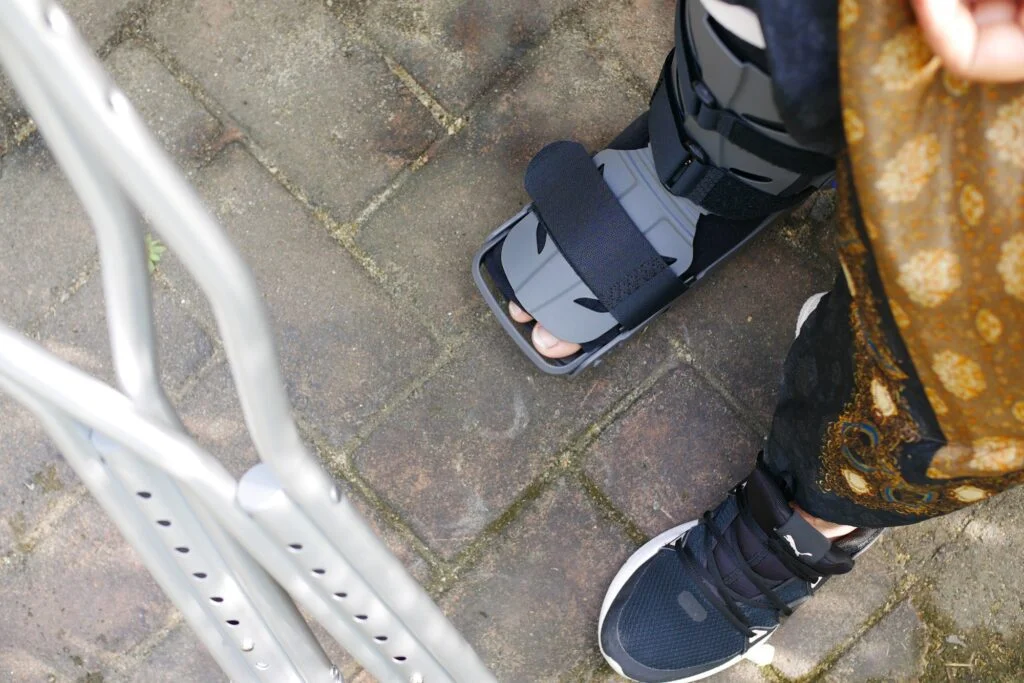
Full recovery typically takes 6 to 12 months, with most patients returning to normal activities by 3 to 6 months post-surgery. Patients are typically non-weight-bearing for 4 to 6 weeks post-surgery in a cast or protective boot. After which, most patients can bear some weight while wearing a boot. Patients typically return to regular shoes around 8 weeks.
Following surgery, recovery, and physical therapy, patients can resume many activities like walking, hiking, swimming, or biking. Conversely, activities such as running, basketball, tennis, and heavy lifting should be avoided. Contact your surgeon immediately if you experience any signs of infection, severe pain, excessive swelling, or other concerning symptoms so your recovery stays on track.
Locations Offering Ankle Replacement
Find a convenient Artisan Foot and Ankle Specialists location near you.




Don’t let ankle pain hold you back any longer, let’s get you moving again.
We’re here to help you restore mobility and get back to the activities you love.