
Cracked Heels and Fissures Treatment
Painful cracks at the base of your heel can heal with the right care. We treat the cause and restore your skin.
Understanding Cracked Heels
What causes heel cracks and fissures, and how the right care helps your skin heal.
Cracked Heels and Skin Fissures
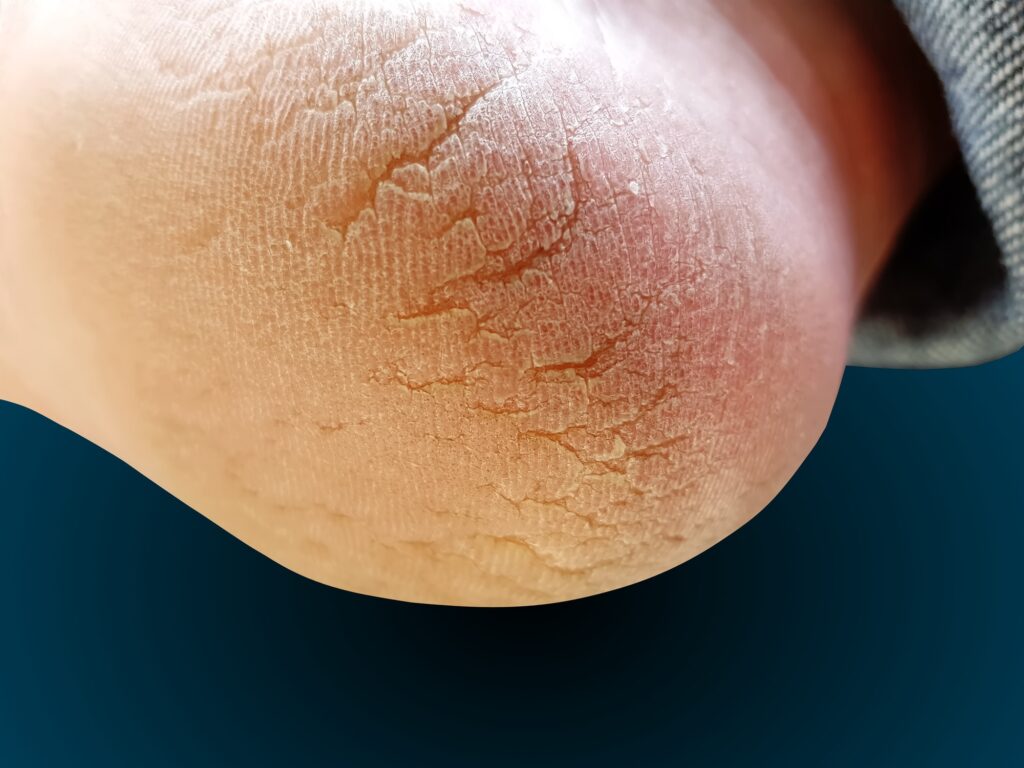
Cracks and fissures are breaks in your skin. They may be the result of skin that is too dry or too moist. When skin is too dry, it can become rough and flaky, and a large fissure often forms at the base of the heel. When skin is too moist, you may get a bacterial or fungal infection, which can cause cracks between the toes.
Your skin is a complex organ that requires the right amount of moisture to stay healthy. It can be hard to achieve the right balance of moisture in your feet. Walking barefoot can strip your skin of its natural oil, and so can wearing sandals or open shoes. Natural oils form a protective layer on your skin, and without enough oils, skin may crack. Cracks may widen, becoming deep fissures that cannot heal on their own.
Moist skin can result from not drying feet after bathing, or from excess sweat. Wearing shoes without socks or shoes that do not ventilate can trap sweat on your feet. Overly moist skin can encourage bacteria and fungus to grow, which weakens your skin and leads to cracks. Fungus can progress to athlete’s foot or thick fungal nails.
Cracks and fissures leave your foot open to infection, so it is important to be seen when the skin breaks down. Your doctor will ask about your medical history, current symptoms, and the kinds of shoes you wear, then inspect your feet for breaks in the skin, growths, drainage, and redness. Your skin may also be tested for fungus to guide the right treatment plan.
Caring for Your Feet at Home
Your doctor will treat cracks and fissures in the office, but daily home care plays a large role in healing and in preventing the problem from coming back. If moist skin is causing fungus or bacteria, your doctor may apply medication to your feet or send you home with an antifungal foot soak or lotion. Oral medications may also be prescribed. For dry skin, your doctor may remove rough patches with a pumice or special lotion, tape fissures to help them heal, and prescribe an antibiotic ointment to soothe cracks and prevent infection.
For dry skin, use moisturizer on your feet after bathing and at bedtime. Ask your doctor before using a pumice stone to reduce calluses. Never walk barefoot, and avoid sandals and other open shoes that expose your skin to the air.
For moist skin, always dry between your toes after bathing and do not apply moisturizer between the toes. Ask your doctor about antifungal powders and lotions or special foot antiperspirants. Choose cotton socks instead of nylon so moisture can move away from your skin.
Whether you have dry or moist skin, check your feet daily. Look at the top and bottom of your feet and between your toes, using a mirror if needed. Choose well-fitting canvas or leather shoes that allow skin to breathe, avoid synthetic shoes that trap moisture, and always wear shoes with socks, even at home. Call your doctor if you notice redness, swelling, or increased heat, since early care helps prevent a small crack from becoming a serious infection.
Find Cracked Heel Care Near You
Visit any of our convenient locations for evaluation and treatment of cracked heels.




Don’t let a painful heel crack turn into something worse.
We’ll help your skin heal and show you how to keep it healthy.